
10 Signs Your Boat Needs Engine Repair Before It Leaves You Stranded
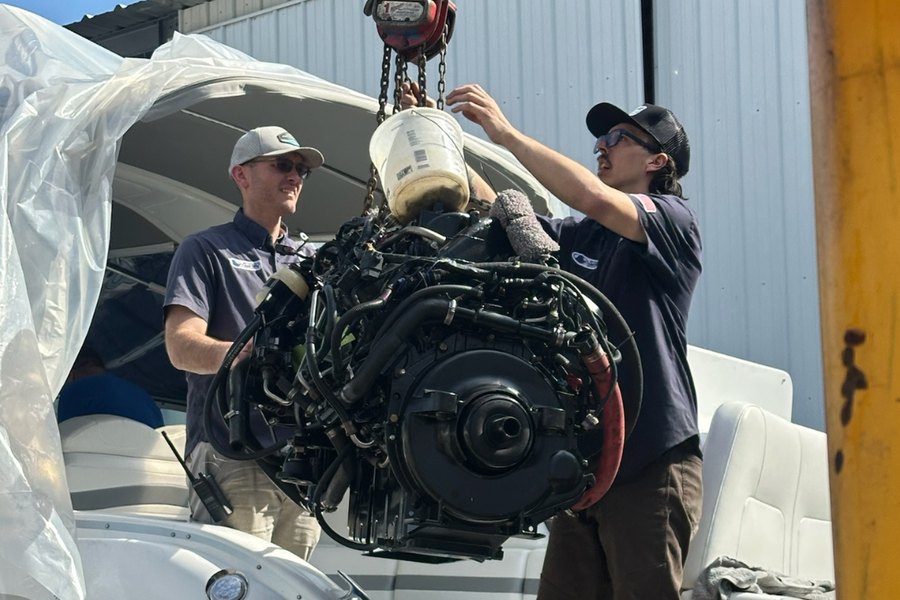
Boat engine problems rarely appear without warning. In many cases, the engine will begin showing small signs of trouble before a complete breakdown occurs.
Recognizing those warning signs early can help prevent more serious damage, reduce repair costs, and keep you from losing valuable time during Connecticut’s boating season. If your boat is difficult to start, losing power, overheating, or operating differently than usual, it may be time to schedule professional marine engine repair.
Here are 10 common signs that your boat engine needs attention.
1. The Engine Is Difficult to Start
An engine that turns over slowly, requires several attempts to start, or will not start at all may have an issue with the battery, starter, fuel system, ignition system, or another mechanical component.
Occasional starting trouble should not automatically be dismissed, especially when it becomes more frequent. A marine technician can test the battery and charging system, inspect fuel delivery, and use diagnostic equipment to help identify the source of the problem.
Addressing the issue early may prevent the engine from failing completely when you are away from the dock.
2. The Boat Is Losing Power
A noticeable loss of power is one of the clearest signs that something is not operating correctly.
The boat may struggle to accelerate, take longer to reach cruising speed, or fail to reach its normal revolutions per minute. In some cases, the engine may feel as though it is working harder while the boat performs worse.
Power loss can be caused by several issues, including:
- Restricted fuel flow
- Dirty fuel filters
- Fouled spark plugs
- Fuel contamination
- Cooling-system problems
- Sensor or computer faults
- Propeller damage
- Engine wear
Because performance problems can involve both the engine and underwater running gear, a complete inspection may be necessary.
3. The Engine Is Overheating
Engine overheating should never be ignored.
A marine engine depends on a properly functioning cooling system to control operating temperature. When cooling water cannot circulate correctly, engine temperatures can rise quickly and cause serious internal damage.
Common causes of overheating include:
- A worn or damaged impeller
- Blocked water intakes
- Debris in the cooling system
- Low coolant
- A failed thermostat
- Damaged hoses or belts
- Internal cooling-system problems
If the temperature gauge rises, an overheat alarm sounds, or steam appears near the engine, reduce power and shut the engine down when it is safe to do so. Continuing to operate an overheating engine can turn a service issue into a major repair.
4. You Hear Knocking, Grinding, or Unusual Noises
Boat owners become familiar with how their engines normally sound. Any new knocking, grinding, rattling, squealing, or clunking noise should be investigated.
A squealing sound may indicate a loose or worn belt. Grinding could point to a starter, bearing, drive, or moving component that is failing. Knocking noises may be associated with combustion problems, lubrication issues, or internal engine damage.
Even if the boat appears to be running normally, unusual sounds can be an early warning that a component is wearing out or no longer operating correctly.
5. The Boat Is Vibrating More Than Normal
Some vibration is expected while a boat is operating, but sudden, severe, or increasing vibration is not normal.
Excessive vibration may be caused by:
- A bent or damaged propeller
- Fishing line wrapped around the propeller shaft
- Shaft alignment problems
- Damaged engine mounts
- Running-gear issues
- Engine misfires
- Uneven engine performance
Vibration that becomes stronger as the boat accelerates may indicate an underwater hardware problem. In that situation, a short-haul inspection may be needed to examine the propeller, shaft, and related components.
Continuing to operate the boat with severe vibration can cause additional damage.
6. You See Excessive or Unusual Smoke
The color and amount of exhaust smoke can provide useful information about what may be happening inside the engine.
A small amount of temporary smoke may not always indicate a major problem. However, persistent or heavy smoke should be inspected.
Depending on the engine, unusual smoke may indicate:
- Excess fuel entering the engine
- Oil being burned
- Cooling water problems
- Restricted airflow
- Fuel-injection trouble
- Internal engine wear
Smoke accompanied by power loss, overheating, odors, or warning alarms requires immediate attention.
7. The Engine Stalls or Runs Rough
An engine that stalls, surges, hesitates, or idles unevenly may have an ignition, fuel, airflow, or electrical problem.
The engine may operate properly at certain speeds but struggle at idle or under acceleration. In other cases, it may shut down unexpectedly and restart after sitting for a short period.
Possible causes include:
- Contaminated or old fuel
- Clogged fuel filters
- Fuel-pump problems
- Worn spark plugs
- Faulty sensors
- Loose electrical connections
- Charging-system issues
- Restricted airflow
Because several different problems can create similar symptoms, professional diagnostics are often the fastest way to find the actual cause.
8. Warning Lights or Alarms Keep Appearing
Modern marine engines use sensors and onboard computers to monitor operating conditions. A warning light, audible alarm, or fault code may indicate an issue with temperature, oil pressure, voltage, fuel delivery, emissions, or another system.
Do not repeatedly clear or ignore an alarm without determining why it appeared.
Even when the engine seems to be operating normally, the warning system may be detecting a condition that could lead to a breakdown or expensive damage. A trained technician can connect diagnostic equipment, review stored fault codes, and inspect the related system.
9. You Notice Fuel, Oil, or Coolant Leaks
Visible fluid beneath or around the engine should always be investigated.
Fuel leaks create a serious safety hazard and should be handled immediately. Oil or coolant leaks may indicate a loose connection, damaged hose, failed seal, corrosion, or a larger mechanical problem.
Signs of a possible leak include:
- Fuel odors
- Fluid in the bilge
- Oily residue
- Dropping fluid levels
- Stains around hoses and fittings
- Unexplained smoke
- Engine temperature changes
If you smell fuel, turn off the engine and electrical equipment when it is safe, ventilate the area, and contact a qualified marine technician.
10. Fuel Consumption Has Increased
A sudden increase in fuel use may be a sign that the engine is no longer operating efficiently.
Reduced fuel economy can result from dirty filters, worn spark plugs, injector problems, poor compression, sensor faults, excessive engine load, or propeller damage. Additional weight, hull growth, and changing operating conditions can also affect fuel usage.
However, when increased fuel consumption appears alongside power loss, rough running, smoke, or difficulty reaching normal operating speed, the engine should be inspected.
Do Not Wait for a Complete Engine Failure
A boat engine does not need to stop running completely before it requires repair.
Small changes in starting, sound, vibration, temperature, fuel use, or performance may be early warnings of a larger issue. Scheduling service early gives a technician the opportunity to diagnose the problem before it causes more damage or leaves you stranded.
It can also reduce the amount of time the boat is unavailable during the busiest part of the season.
When Should You Stop Operating the Boat?
Stop operating the boat and arrange for professional service if you experience:
- Severe overheating
- Low oil-pressure warnings
- Strong fuel odors
- Visible fuel leaks
- Heavy smoke
- Loud knocking or grinding
- Steering failure
- Sudden and significant power loss
- Water entering the boat
- Repeated critical alarms
When possible, move the vessel to a safe location before shutting the engine down. Do not continue operating simply to see whether the problem disappears.
Marine Engine Repair at Petzold’s Port Clinton Marina
Petzold’s Port Clinton Marina provides professional marine engine repair and boat service in Clinton, Connecticut. Our on-site service team can assist with starting problems, loss of power, overheating, warning alarms, fuel-system issues, electrical troubleshooting, steering concerns, routine maintenance, and general mechanical repairs.
Our technicians use professional diagnostic equipment and ongoing technical training to identify problems accurately and recommend the appropriate repairs.
When an issue may involve a propeller, shaft, hull component, or other equipment below the waterline, we can also coordinate short-haul service for further inspection.
Backed by more than 80 years of marine experience through Petzold’s Marine Center, our Clinton service team supports boaters throughout Clinton, Westbrook, Madison, Killingworth, Essex, Old Saybrook, and surrounding Connecticut shoreline communities.
Schedule Boat Engine Repair in Clinton, CT
If your engine is hard to start, losing power, overheating, vibrating, or displaying warning alarms, schedule an inspection before the problem becomes more serious.
Contact Petzold’s Port Clinton Marina to request marine engine diagnostics, maintenance, or boat engine repair in Clinton, Connecticut.